Showing posts with label muscle. Show all posts

A Fitness Coach's Editorial: Exercise Technique at the Commercial Gym

Funny cartoon nerd geek typing on laptop
Here I present a bit of an editorial post. It involves subject matter that may be a little controversial but it is true nonetheless, at least in my opinion. I base the observations that I’m about to describe on decades of training, study, application and my professional fitness expertise. 

My Fitness and Exercise History

I’ve always been an enthusiast of all things muscle. Since the age of 15 I’ve taken in as much literature, education and fitness-related material that I possible could. I started bodybuilding before I could legally drive in the U.S. and I have hitchhiked to they gym, in a blizzard, out of desperation, so that I could get to the gym to get in a workout.

Like many other high school athletes and young men who wanted to achieve a lean, muscular physique, I devoured the content of muscle magazines and outdated text books to find the most optimal strategies to build massive amounts of muscle mass.

Back in the 1990’s I didn’t understand the science of muscle hypertrophy as a lot of young men know it today. Thanks to YouTube influencers, good and bad, the information is out there, albeit with much debate and at time, contentious. 

For example, it is now understood that one of the most effective ways to build large, full biceps is through stretch-mediated hypertrophy. This science-based concept for building big biceps has gained traction and has showed a lot of promise, although it’s full effectiveness is still debated in the fitness community.

My Fitness and Exercise Training

Once I started to build a solid base of muscle tissue and learned exercise technique from some experienced lifters and gymgoers, I pursued a personal training certification. I got certified as a personal trainer at age 20 and I started working at a major commercial gym, gradually working my way to a middle management position.

I felt confident in my knowledge, experience and relative success as a bodybuilder and I moved in circles of men and women who mostly lived the bodybuilding lifestyle. As such, I developed an eye for poor, sometimes risky, exercise technique and execution. This furthered my endeavor to educate the general population on exercise program development and safe, sustainable program design.

I was transferred to several gyms in the Baltimore, MD area into the early 2000’s and I took up competitive powerlifting. It was during my experiences as a strength athlete that I perfected the squat, bench press and deadlift, putting up relatively impressive numbers for my age at the time. 

My diligence in learning, engraining and perfecting my form in the big three lifts carried over to my laser-focused techniques in all of my accessory exercises as well. I got guidance and encouragement from my powerlifting coach, training seminars and, of course, from men and women much stronger and more experienced than me.

In 2002, I became a police officer and redirected my time and attention to law enforcement training and developing my skill and knowledge to perform my job as safely and effectively as possible. As I got settled in, my passion for powerlifting returned and I competed for another 10 years as a strength athlete.

To maintain a balance of powerlifting training and my career, I found it best to build my dream gym in my home’s two car garage. It was there for nearly 20 years I trained alone, applying my accumulating knowledge of exercise science and application. I was sequestered from the commercial gym setting and I took for granted the 25 years of exposure I had to high level, expert training and fitness-related education.

I made almost no observations of the general population exercising inefficiently in a commercial setting, violating gym etiquette standards and performing their lifts with horrific, dangerous technique. 

Funny black pug dog wearing glasses
My Commercial Gym Observations

In 2023, a YMCA facility opened very close to my home and I took advantage of it’s close proximity to my residence and the availability of a variety of modern exercise equipment. The first days in the gym were awe-inspiring for me. I hadn’t seen so many quality machines, racks and free weights in a very long time. I also hadn’t seen the masses exercising in such a cringy manner either.

As if I didn’t know this already, the vast majority of exercisers used very poor technique and their exercise selection was curious. I was reminded that most people don’t squat with proper depth, don’t use a full range of motion and many of the men used far too much weight than what would be ideal for their given movement. The only thing I saw people getting good at was increasing their risk for injury and being sloppy exercisers.

What kind of surprised me, but shouldn’t have, was that most women used better technique and selected exercise more intelligently than many of the men. I attribute a lot of this to the fact that women generally aren’t “ego lifters” and they typically don’t try to impress others in the gym. 

As such, they usually take care in selecting their load and choose exercises that are most effective for their target muscle versus the exercises that allow them to move a massive amount of weight. 

Muscle nerd geek holding books
Take Away for Better Fitness Results

People will forever exercise ineffectively in an unsafe, inefficient manner. This is one of the reasons many do not see positive results and get frustrated, leading them to fall off a consistent exercise program. Injuries are common amongst exercisers who perform lifts inappropriately, which keeps them out of the gym for extended periods of time. 

So, fellow fitness enthusiast, I suggest you seek out as much quality information as you can on proper exercise selection and technique and the most effective, scientific principles to build a lean, muscular physique. This often involves humbling yourself, slowing down and spending time and effort perfecting proper, safe exercise form.

Also, gentlemen, take a hint from the ladies. Stop ego lifting, lighten your load and select exercises that are appropriate for your goals, not impressing other people in the gym. Believe me, most gymgoers don’t care about how much weight you lift.

My Fitness Enhancement Recommendation 

Now, go have a productive workout and please, pay attention to your form and exercise technique and if you need help or assistance, don’t be embarrassed to seek out the guidance of a professional online fitness coach or certified personal trainer.

Also, I suggest reading up on current literature on exercise program design, application and execution. By educating yourself and interacting with experienced, knowledgeable, fitness enthusiasts, you’ll likely reap the rewards and achieve your muscular, lean body.

Also Read

Two Must Read Muscle Building Books to Add to Your Library

How to Get Compliments in the Gym: 7 Strategies That Really Work

References

1. Wakahara, T., et al. (2012). Stretch-mediated hypertrophy in the vastus lateralis muscle and patellar tendon. Journal of Strength and Conditioning Research, 26(2), 567-573. This study investigates the potential for stretch-mediated hypertrophy in the quadriceps muscles and tendons. It suggests that muscle elongation may play a role in hypertrophy.

2. McMahon, G. E., et al. (2014). Influence of concentric and eccentric resistance training on architectural adaptation in human quadriceps muscles. Journal of Applied Physiology, 116(11), 1493-1502. This study examines the effects of eccentric (stretching) and concentric (contraction) resistance training on muscle architecture, providing insights into the role of muscle lengthening in muscle hypertrophy.

3. Kubo, K., et al. (2007). Effects of repeated muscle contractions on the tendon structures in humans. European Journal of Applied Physiology, 99(4), 423-429. This study investigates how muscle contractions affect tendon structures, suggesting that muscle tension alone, without stretch, may be sufficient for muscle adaptation.

4. Blazevich, A. J. (2006). Effects of physical training and detraining, immobilization, growth and aging on human fascicle geometry. Sports Medicine, 36(12), 1003-1017. Blazevich's review article discusses how muscle fascicle geometry changes in response to various stimuli, including resistance training, and may provide insights into the role of muscle stretch in hypertrophy.

Advanced Muscle Building Guide, Instant Access

Advanced Muscle Building Guide
If you're looking for an advanced guide for muscle building, I have a book recommendation for you. "Scientific Principles of Hypertrophy Training" by Renaissance Periodization is among the best, most relevant books on the topics of muscle building, fat loss and improving athletic performance. 

The text is available here at Amazon for you to read instantly or order for delivery.  

Unlock the Secrets of Muscle Growth 

"Scientific Principles of Hypertrophy Training" takes you on an enlightening journey into the science of muscle building, also known as muscle hypertrophy. 

Authored by a team of seasoned experts including competitive bodybuilder and sports physiologist Dr. Mike Israetel, recovery specialist Dr. James Hoffman, Neuroscientist Dr. Melissa Davis, and IFBB professional bodybuilder Jared Feather, MS, this book takes a deep dive into evidence-based training methods. 

The Blueprint for Maximum Muscle Growth 

This brilliantly written book is your roadmap to comprehending and implementing the key principles of muscle development. Here's an idea of what you'll learn about:

Muscle Physiology

Get insight into the fundamental principles of muscle physiology, including muscle fiber types, muscle contraction, and the biological mechanisms that drive muscle growth. 

Training Variables

Understand the critical training variables influencing hypertrophy, including volume, intensity, frequency, and exercise selection, and learn how to manipulate them effectively. 

Nutrition and Recovery

Dive into the pivotal role of nutrition and recovery in supporting muscle growth. Explore topics such as protein intake, calorie surplus, and optimizing sleep and rest practices. 

Program Design

Discover how to design customized hypertrophy-focused training programs tailored to your specific goals, whether you're into bodybuilding, strength training, or athletic performance enhancement. 

Progressive Overload

Master the concept of progressive overload and learn how to continually challenge your muscles to promote steady growth over time. 

Periodization

Explore the concept of periodization and understand how to structure training cycles for long-term progress while avoiding frustrating plateaus.

Monitoring and Assessment

Learn effective methods for tracking progress, assessing muscle growth, and making data-driven adjustments to your training and nutrition plans. 

Common Mistakes and Myths

There are a lot of fallacies and misconceptions out there. The authors debunk common myths about hypertrophy training, helping you avoid pitfalls and focus on proven strategies. 

Your Path to Muscle Mastery 
Optimal Hypertrophy

"Scientific Principles of Hypertrophy Training" is an invaluable resource for muscle enthusiasts, athletes, and trainers. It's your ticket to optimizing your muscle-building journey based on the latest scientific research and evidence. 

By grasping the core principles of hypertrophy, you'll be empowered to create more efficient and effective training strategies to achieve your muscle-building goals. 

My Personal Stamp of Approval 

I can't emphasize enough how impactful this book has been in my own muscle building training and program design for clients and athletes. 

As an experienced, educated fitness coach and certified personal trainer, I can confidently say that "Scientific Principles of Hypertrophy Training" is the most comprehensive, relevant, and applicable resource I've read for mastering muscle building through effective program design and implementation.  

If you're ready to take your muscle building knowledge, motivation and results to the next level, you can read "Scientific Principles of Hypertrophy Training" instantly or order your paperback copy directly from Amazon at my affiliate link here. 

This text will revolutionize your hypertrophy training and motivate you to intelligently and effectively design your muscle building program for optimal results. 

About the Authors


Dr. Mike Israetel RP
Dr. Mike Israetel

A prominent figure in the world of strength and conditioning, known for his expertise in sports physiology, bodybuilding, and nutrition. He holds a Ph.D. in Sports Physiology from East Tennessee State University and he is recognized for his extensive contributions to the fitness industry, particularly in the areas of muscle hypertrophy and strength training.

 He has authored and co-authored numerous research papers and articles, shedding light on evidence-based training methods and nutritional strategies. 

As a competitive bodybuilder himself, Dr. Israetel has practical experience in the andHe understands the real-world challenges and demands that athletes and fitness enthusiasts face, making his advice practical and relatable. 

In addition to his academic and practical pursuits, Dr. Mike Israetel is a sought-after speaker, educator, and coach. He has a talent for breaking down complex scientific concepts into digestible information that empowers individuals to make informed decisions about their training and nutrition.


Dr. James Hoffman RP
Dr. James Hoffman

A distinguished figure in the realm of sports science and recovery. As an expert in the field, he has made significant contributions to the understanding of human performance and injury prevention. 

Dr. Hoffman's educational background includes advanced degrees in Exercise Physiology and Biomechanics, which form the foundation of his expertise. His research and work primarily focus on the recovery aspect of sports and athletic performance, an area crucial for athletes looking to optimize their training and minimize the risk of injuries. 

As a renowned recovery specialist, Dr. Hoffman has collaborated with various athletes, coaches, and teams, providing invaluable insights into recovery strategies, techniques, and practices. His practical knowledge extends beyond the laboratory, making him a trusted advisor to athletes seeking to enhance their performance.

Dr. Mel Davis RP
Dr. Mellisa Davis

According to Renaissance Periodization's website, "Dr. Melissa Davis holds a PhD in Neurobiology and Behavior and has 10 years of research experience. Her work has been featured in Scientific American, published in high impact, peer reviewed journals, and recognized by faculty of 1000. 

She has made a lifelong scientific-hobby of studying sport science and is a life-long athlete and scholar. 

Melissa is currently a Brazilian Jiu Jitsu black belt under Giva Santana at One Jiu Jitsu, and is a multiple time IBJJF Master World Champion. She has also represented the United States in the international Abu Dhabi World Pro Competition on multiple occasions.

Jared Feather, MS

An IFBB (International Federation of Bodybuilding and Fitness) professional bodybuilder known for his achievements in the world of competitive bodybuilding. He has competed at a high level in bodybuilding competitions and earned his IFBB Pro card, which is a prestigious designation signifying his professional status in the sport.

Recommended Reading

The Science of Building Big Arms: A How-To Guide

Compelling Review of Creatine Monohydrate for Muscle Building

Unlock Your Arm Potential: Effective Muscle Building Tool for Arms

Wondering About Arm Size? What Are Big Arms?

measuring massive tan biceps
If you've ever pondered the size of your arms, whether they're "big" or not, keep reading for a bit of insight. 

Do I Have Big Arms?

So, are 16-inch arms considered big? How about 15-inch or 17-inch arms? Let's unravel the mystery of what qualifies as big arms.

You shouldn't just focus on your biceps or triceps; don't forget the importance of well-defined forearms to complete your arm's overall appearance.  It's been suggested that beefing up your forearms by an inch can add significant size to your biceps. 

Discover how to achieve this in my comprehensive article, The Key to Building Big Forearms.  

For that ideal physique, traditional measurements suggest that the neck, upper arms, and calves should all have the same circumference, typically around 17 inches.

Indeed, a few individuals might effortlessly attain these measurements. 

However, achieving this symmetrical perfection can be a considerable challenge, as muscle growth varies across the body. 

In this article, we'll delve into what's generally considered "big" when it comes to arms, particularly your biceps and upper arms.  

How to Measure Your Arms

For the purpose of this article, upper arm measurements are established on a cold, flexed upper arm using a measuring tape. By "cold," I mean without muscle pump or at least twelve hours after a workout. 

The ideal measuring tape for arm measurements, like the MyoTape Body Measure Tape, is non-elastic, delivers consistent outcomes under dry and moist conditions, and remains secure during positioning. 

Additionally, body composition plays a role when evaluating arm size. Individuals with higher body fat can yield substantially bigger arms due to the fat tissue volume beneath the skin. 

Conversely, a lean, muscular individual might display smaller tape measurements due to their lower body fat percentage. We'll employ the example of a fit individual with approximately 15% body fat to define the scope of a sizeable arm. 

You can conveniently gauge your body fat percentage at home using the Omron Fat Loss Monitor. 

How to Gauge Big Arms 

To assess upper arm size and girth, flex your biceps as if you're showcasing your muscularity. 

Take your measuring tape and encircle it around the widest point of your upper arm. 

This point may vary among individuals, but many find the best position to be just off-center towards the shoulder. 

Ensure the measuring tape remains even throughout the arm's circumference, avoiding any distortion that could lead to inaccurate measurements. 

Gently tighten the tape against your arm, ensuring it's in contact with the skin but not digging into it. 

Align the tape's end closest to the one-inch mark with the tape itself, ensuring the side edges are even.

The tape's end will meet a measurement, like 16 inches. This signifies your upper arm's size. 

Defining Big Arms

Now, let's address what's considered "big" in the arm department: 

11–12 inches: Small arms. Perhaps you're just starting your fitness journey.

13–14 inches: Moderately small arms. There's room for growth.

15–16 inches: Decent size arms. You're muscular but not yet "big."

17–18 inches: Muscular arms. You're making an impressive statement.

19–20 inches: Big Arms. Congratulations, you've got the coveted big arms!

21+ inches: Massive Arms. You've gone beyond big – you're simply enormous.

If you find yourself in the "Big Arms" or "Massive Arms" category, kudos! Keep your determination high, and your arms will only get bigger.

Also Read

The Science of Building Big Arms: A How-To Guide

How to Get Compliments in the Gym: 7 Strategies That Really Work

How to Make Your Arms Look Bigger and More Muscular in a Photograph

Prevent Weight Gain and Muscle Loss with Better Sleep

weight gain on a plate
What if I told you that sleep is one of the most important components of achieving and maintaining a lean, muscular physique and that being chronically under-slept can actually make you fatter and less muscular.

When I present this fact to people that I coach, train and educate, the statement is often met with skepticism. After all, sleep is only for lazy people and you can sleep when you’re dead right?

Nope!

Read on and learn why getting adequate quality sleep is non-negotiable if you want to prevent fat gain and muscle loss and achieve a lean muscular physique. 

Caloric Intake 

The fact is, most people eat more calories during waking hours when they are sleep deprived or did not get enough quality sleep. Multiple studies have proven this and published data by certified sleep coach Nick Lambe and the American Council on Exercise have shown this to be true. 

In fact, people who do not get adequate quality or quantity sleep eat on average 500 calories more per day than under conditions when they are well-slept. To demonstrate how significantly this influences fat gain, consider that 1 pound of fat tissue is equal to 3500 calories.

When a person eats an excess of calories needed for daily energy expenditure, the surplus will be stored as fat tissue. If the extra 500 calories that are eaten per day while under-slept are more than what is burned daily, it would take one week, or just seven days, to gain a pound of fat. That’s gaining a lot of fat quickly!

While these numbers are averages, the fact remains that when you don’t get enough quantity or quality sleep, it is difficult to achieve and maintain a lean physique. 

Cravings and Food Choices 

If the above fact were not bad enough, when a person does not sleep enough, food cravings are far more difficult to control the day after a poor night’s sleep. This is due to a disrupted balance of the hormones ghrelin and leptin, which regulate hunger and satiety.

What makes matters worse, when you don’t sleep enough, you’re far more likely to make impulsive decisions as the part of the brain that regulates the decision-making process is negatively impacted.

So, compounding these two factors means that not only are you more likely to crave high calorie foods when sleep deprived but you’ll be much more likely to impulsively choose foods that will make it difficult to get ahead in your fat loss efforts. 

Impact on Muscle Mass and Bodyfat 

flabby stomach and tape measure

Did you know that when a person’s body is in an under-slept state, the risk of losing muscle mass is significantly greater. Not only that, but the body is prone to retaining fat tissue, making it very difficult to maintain a desirable body composition or improve the body’s fat-to-muscle ratio. 

This is a built-in, evolutionary process that cannot be defeated. If you are chronically sleep deprived or do not get enough quality sleep, the body will naturally shed muscle tissue and hold on to fat. 

Exercise Effectiveness 

It is well understood that exercise is one of the most impactful activities that builds and retains muscle and burns body fat. That means when you don’t sleep enough or the quality of your sleep is poor, at least two significant problems arise that negatively impact your body’s ability to build and retain muscle and lose body fat. 

Motivation to work out, either with resistance training or cardiovascular exercise regardless of intensity level, will be greatly diminished. You are far more likely to skip workouts and be less physically active in general. 

If you do manage to get your exercise in when you are in an under-slept condition, fatigue sets in sooner which will likely result in shorter exercise duration. Additionally, performance output will almost certainly be diminished which results in less simulative workouts and energy expenditure.

Exercising under these conditions is less than optimal when trying to build muscle and burn fat.

How to Prevent Weight Gain and Muscle Loss 

The simplest, most basic solution to preventing weight gain and muscle loss is to get an adequate amount of quality sleep. This solution is challenging for a lot of people, so this importance of the sleep component in achieving optimal fitness and wellness is often dismissed and disregarded.

Denying the importance of sleep is common, thus resulting in an overfat, underfit population. There is no denying the correlation between poor health, poor physical fitness and unhealthy body composition and a chronic, under-slept state.

Thankfully, this can be addressed and significant, rapid improvements in body composition and physical performance can be experienced. And it can start tonight!

Resources for Better Sleep 

Consider the below resources and articles that expand on the importance of sleep, why sleep is so critical and how to get more, better quality sleep.

How Sleep Affects Your Weight and Performance

Why We Sleep: Unlocking the Power of Sleep and Dreams (Amazon affiliate link)

Get Better Sleep Starting Tonight: Six Tips for Improving Your Sleep

How Much Sleep Do You Really Need?

What Are Considered Big Forearms?

What are considered big forearms
Many men understand that looking big and muscular requires certain muscle groups to be well-developed and defined. But the fact remains, a lot of males continue to wonder what are considered big forearms. 

I’ve spoken to a lot of bodybuilders, muscle enthusiasts and athletes and many ask, “Do I have big forearms?”

Most of the time I’ll take a look at how well-developed the muscles of their lower arms are and give them an honest assessment.

So, it's asked: Are 12 inch forearms considered big? Are 11 inch forearms big? What about 13 inch forearms?

First Determine Your Forearm Size

When trying to determine if a person has big forearms, several factors have to be taken into consideration. There are many components of the soft tissue structure of the lower arm, but a few can be built to make your forearms look bigger. 

I’ve written extensively on the topic of building large forearms on this blog and in several pieces of literature and documents throughout my career as fitness coach, personal trainer and strength athlete. 

According to the principle of specificity for bodybuilding, focus can be placed on a particular muscle or muscle group specifically for the purpose of making it grow. 

Using the principle of specificity for forearms is no different. The highly-effective process of periodization for bodybuilding can be applied to target the largest, most growth-prone muscles of the forearms. 

Know the Biggest Muscles of the Forearm

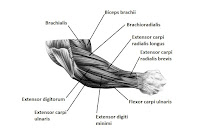
The three biggest muscles of the forearm are responsible for biomechanical movement patterns. 

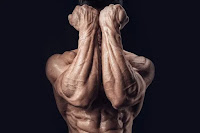
Biggest muscles of the forearmThe brachioradialis, forearm flexors and extensors are responsible for flexion and extension of the hands, lower arms, and upper arms. 

The best way to make the forearms look big is to actually make the muscles of the lower arm larger.

Exercises such as barbell and dumbbell wrist curls, wrist rollers, hammer curls and leverage bar exercises are enough to get the job done. 

It’s true that most compound movements that involve the grip and pulling movements involve the forearm muscles to some degree. In fact, some of the best exercises to grow the forearms include rowing and weighted carries. 

As for the carries, such as farmers walks for big forearms, they involve more of an isometric contraction, which isn’t ideal for making the muscles of the lower arms bigger. 

What Are Considered Big Forearms?

So, if you’re like many others and are wondering what are considered big forearms, consider this: unless you have good genetics to build the forearms, the muscles of the lower arms are relatively small and not prone to much growth. 

However, with continuous effort and adherence to the specificity principle for bodybuilding, just about anyone can develop the musculature of the lower arm and make the forearms look bigger.

Lean forearms
The best way to make the forearms look bigger does involve growing the muscles of the lower arm through progressive overload and periodization for bodybuilding, but it also involves another very important factor. 

Becoming lean and losing bodyfat will make the forearms look bigger and muscular, even if the muscles themselves haven’t grown tremendously.

The definition and separation of the muscles of the lower arms through low bodyfat levels will give the appearance of having large forearm muscles.

Recommended Reading for Muscle Growth

For a more in-depth, advanced and scientifically-based look at how to optimally build muscle and shred fat, check out Renaissance Periodization's Scientific Principles of Hypertrophy Training  

This book is the most comprehensive text on developing the best muscle building programs that I have read to date. 

Look inside and preview the text here at Amazon

Also Read:

Build Big Biceps With These Three Exercises

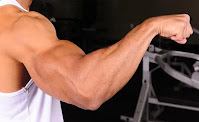
big bicep and forearm
The three exercises described in this article are perhaps the best for building big, muscular biceps.  They incorporate a large compound movement and two isolation exercises.  2

For the best bicep building results, the most effective, science-based resistance training program must be performed. (affiliate link)

By including these three exercises in your workout program you can expect to experience tremendous, noticeable growth of the biceps.  

Barbell Row

It may seem counter-intuitive that one of the best exercises to develop big biceps is also one of the best mass building exercises for the back.  

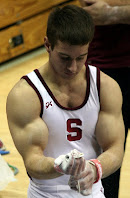
The fact is, in order to move heavy iron in a rowing motion, the biceps are strongly activated.  Take a look at the biceps of competitive rowers and gymnasts. 

The primary movements that they perform are pulling movements, which heavily involve the upper back and arms.  

Gymnast BicepsThe barbell row is performed by loading a barbell with a moderate amount of weight and taking hold of the barbell in front of the body with an overhand or grip. 

Once in the starting position, bend over at the waist so that the upper body is positioned between 90 and 45 degrees and maintain that position through the entire execution of the lift. 

The barbell should be pulled from a straight arm position until it gently makes contact with the belly, just over the naval.  While performing the exercise, the shoulder blades should be pulled together and act as the primary mover of the barbell.


What you’ll notice while performing pulling movements such as the barbell row is that the muscles of the forearms and biceps will fatigue before the large, stronger muscles of the back and posterior deltoids.    This is an indication that the biceps are being used to a large degree, that the muscle fibers are contracting and potential for tremendous growth is present. 


Many people shy away from big, heavy barbell rows because they are difficult to perform properly.  It is true that it takes a little while to master the movement.  

The lower back, hamstrings, upper back, shoulders and arms all have to perform in concert to make the bar travel along the correct path for the best possible muscle and strength gains.

 As I explain in the article The Top Three Exercises to Build a Monstrous Back, the barbell row can pack on an incredible amount of muscle tissue to the entire upper body, including the biceps.  This movement must be included in the workout program of anyone who wants to build big biceps. 

Cheat Curls

In his book Hardcore Bodybuilding: A Scientific Approach, Dr. Fred Hatfield describes the principle of compensatory acceleration and how it should be implemented into a workout program to develop explosive strength and muscle gains.  

The concept involves exploiting a person’s leverage mechanisms and gliding through the weakest point of a movement with explosive acceleration. 

The idea is to generate as much speed and power through a stronger range of motion, to carefully modify body position to a greater leverage and explosively move weight through what is considered an exercises sticking point. 

This allows the exerciser to expose muscle fibers to a greater load than would possible under normal, more controlled movements.  

In the case of barbell curls, the sticking point, or point of the movement that is most difficult due to a mechanical disadvantage, is the midpoint.  In order to blast through the midpoint and expose the muscle fibers of the biceps to greater stress, compensatory acceleration can be implemented.

This would involve moving the weight explosively from the starting position of a barbell curl through the sticking point by allowing the upper body to lean backwards under control, allowing the elbows to move slightly away from the body and allowing the muscles of the shoulders to assist in moving the weight through the midpoint.  

This will provide tremendous stress to the fast-twitch muscle fibers of the biceps and allow explosive muscle growth to occur. 

Arnold Cheat Curls
Cheat curls were a mainstay in Arnold Schwarzenegger’s arm routine and have been credited by many top bodybuilders as one of the best mass building exercises for the biceps.  It is perhaps the most effective isolation exercise for biceps that exists. 

Extreme caution must be exercised when performing cheat curls.  The movement is so excruciatingly effective at placing stress on the tissues of the upper arm that tendon injuries may occur.  

Many lifters have experienced torn tendons of the biceps or biceps tendonitis from performing cheat curls. 

It is important to gradually increase the resistance level over time to allow for proper adaptation to occur.  This is okay, because immediate, noticeable bicep growth can occur immediately upon implementing cheat curls into a workout program, even with sub-maximal weights.  

However, in recent years, robust scientific research has shown that performing a more strict version of bicep curls through a full range of motion is superior to heavier cheat versions. 

Hammer Curls

The beauty of hammer curls is that they heavily involve the use of forearm muscles and help the lifter to achieve total bicep and forearm development.  Large, well developed forearms make the biceps look bigger and more muscular.  When trying to build big biceps, it is important to incorporate exercises that also target the muscles of the forearms. 

Dave Tate ArmsHammer curls are generally performed using dumbbells or specialty bars that can be used with plate weights or cables.

They are performed by holding weight in each hand and positioning the arms with the elbows at the sides and the palms facing each other.  The movement is executed much like pounding your fist on a table. 

It simulates a hammering movement, thus the name “hammer curl.”  By maintaining the arm position throughout the entire curling range of motion, the muscles of the forearms and biceps work to move the weight, causing stress that will ultimately lead to muscle growth. 

By allowing the elbows to drift away from the body slightly, greater recruitment of the forearms muscles can be achieved and more development of the lower arm muscles can occur. 

An exercise routine to build big, powerful biceps can look something like this:

Exercise:            Number of Sets:          Weight:       Number of Reps:

Barbell Row               3-5                            Moderate           8-12
Cheat Curls                2-4                            Heavy                 6-10
Hammer Curls           2-4                            Light                  12-20

By performing the movements with varied resistance levels and repetition ranges, the desired stress can be applied to muscle fibers to stimulate muscle growth.  The above sample bicep routine can be performed by itself or along with other muscle groups.  

Because the muscles of the biceps are relatively small, they can be exercised more frequently.  However, it is also easy to overreach the biceps muscles, so it is important not to exceed 6-8 isolation exercises for the biceps.

Also Read:

Look Bigger and More Muscular: Get a Tan

The sunless tanning foam described in this review, available here at Amazon, provides the best, most natural looking tan to make the body look leaner and more muscular.

The most reliable way to build a lean, muscular physique is by adhering to a sound nutritional program and the most effective, science-based resistance training program that is specifically designed to enhance the size, thickness and density of muscle fibers.  

A long-term approach must be taken and realistic, time-oriented goals must be established to ensure that consistent progress is made toward a large, muscular body. 

For the hardcore muscle enthusiast, the above essential components of a bodybuilding lifestyle are a given.  However, sometimes it seems that muscle gains and fat loss is painfully slow. 

It can be hard to remain motivated and disciplined to engage in regular, intense workouts when progress seems to slow.  Sometimes all that is needed a just a little bit of evidence that the muscular system is responding to the gut-busting, all-out workouts and strict diet regimen.

Have you ever experienced your bodybuilding motivation level skyrocket when you noticed a vein in your upper arm that you’ve never seen or how your trapezius muscles look so full and developed that you can’t wait to get into the gym for another intense weight training session? 

That indication of fat burning and muscle hypertrophy has triggered something in your brain that reignites the desire to hit the weight room hard and build a leaner, more muscular body. 

It is possible to experience that renewed motivation through a simple technique that is guaranteed to make you look bigger and more muscular instantly. 

As I explained in the article Six Tips to Make Your Arms Look Bigger Instantly, a few tried-and-true strategies can be used to make the arms of the biceps and triceps look bigger.  One of the most sure-fire ways to make your arm muscles look bigger, along with the muscles of the chest, shoulders and back, is to create the illusion of a leaner body. 

A leaner body, with minimal amounts of fat tissue, creates an illusion that makes muscles look bigger than they actually are.

Professional bodybuilders with massively developed muscles use competition tan products to appear full and muscular under bright lights on the competition stage. 

Recreational bodybuilders and fitness enthusiasts can take a lesson from competitive bodybuilders.  

While it is not necessary to artificially darken the color of the skin to drastic levels, applying a high quality self-tanning foam to the skin can instantly make the body look leaner and the muscles bigger and more developed. 

An Internet search for the best tanning products to make muscles look bigger will result in dozens of listings promoting self-tanning creams and lotions that will make the skin look naturally tan. 

While many legitimate online retailers sell tanning creams, consideration should be given to a few factors that will help you determine which self-tanning lotions are best to make the muscles of the arms, chest and shoulders bigger and more muscular.
The best tanning products will:
  • Be natural looking
  • Be odorless or have a pleasant fragrance
  • Will last for several days
  • Will not stain clothing or bedding
Sometimes an exhaustive search must be conducted to find out which self-tanners have the best reviews and which have the lowest prices.  

As with most personal beauty products, cheaper is not better when it comes to artificial tanning products.  Great consideration must be given to consumer ratings of skin tanning products as they are usually the best indication of value, appearance and price.  

After composing the article Six Tips to Make Your Arms Look Bigger Instantly, I conducted extensive research into the best skin tanning product for making the muscles look bigger and leaner. 

After reviewing prices, consumer reviews, ingredients and safety of numerous self-tanning products, I’ve determined that the best, most realistic looking, reasonably priced tanning product is Bondi Sands Liquid Gold Self Tanning Foam.

I personally prefer this Bondi Sands tanning foam over other self-tanning products on the market. The color looks like a real tan and it gradually fades with regular showering over a few days. 

Rather than exposing yourself to harmful sun radiation and tanning beds, consider purchasing a high quality sunless tanning foam like Bondi Sands Liquid Gold Self Tanning Foam.  It’s inexpensive, safe and natural-looking.

Also Read: