Showing posts with label Workouts. Show all posts

A Fitness Coach's Editorial: Exercise Technique at the Commercial Gym

Funny cartoon nerd geek typing on laptop
Here I present a bit of an editorial post. It involves subject matter that may be a little controversial but it is true nonetheless, at least in my opinion. I base the observations that I’m about to describe on decades of training, study, application and my professional fitness expertise. 

My Fitness and Exercise History

I’ve always been an enthusiast of all things muscle. Since the age of 15 I’ve taken in as much literature, education and fitness-related material that I possible could. I started bodybuilding before I could legally drive in the U.S. and I have hitchhiked to they gym, in a blizzard, out of desperation, so that I could get to the gym to get in a workout.

Like many other high school athletes and young men who wanted to achieve a lean, muscular physique, I devoured the content of muscle magazines and outdated text books to find the most optimal strategies to build massive amounts of muscle mass.

Back in the 1990’s I didn’t understand the science of muscle hypertrophy as a lot of young men know it today. Thanks to YouTube influencers, good and bad, the information is out there, albeit with much debate and at time, contentious. 

For example, it is now understood that one of the most effective ways to build large, full biceps is through stretch-mediated hypertrophy. This science-based concept for building big biceps has gained traction and has showed a lot of promise, although it’s full effectiveness is still debated in the fitness community.

My Fitness and Exercise Training

Once I started to build a solid base of muscle tissue and learned exercise technique from some experienced lifters and gymgoers, I pursued a personal training certification. I got certified as a personal trainer at age 20 and I started working at a major commercial gym, gradually working my way to a middle management position.

I felt confident in my knowledge, experience and relative success as a bodybuilder and I moved in circles of men and women who mostly lived the bodybuilding lifestyle. As such, I developed an eye for poor, sometimes risky, exercise technique and execution. This furthered my endeavor to educate the general population on exercise program development and safe, sustainable program design.

I was transferred to several gyms in the Baltimore, MD area into the early 2000’s and I took up competitive powerlifting. It was during my experiences as a strength athlete that I perfected the squat, bench press and deadlift, putting up relatively impressive numbers for my age at the time. 

My diligence in learning, engraining and perfecting my form in the big three lifts carried over to my laser-focused techniques in all of my accessory exercises as well. I got guidance and encouragement from my powerlifting coach, training seminars and, of course, from men and women much stronger and more experienced than me.

In 2002, I became a police officer and redirected my time and attention to law enforcement training and developing my skill and knowledge to perform my job as safely and effectively as possible. As I got settled in, my passion for powerlifting returned and I competed for another 10 years as a strength athlete.

To maintain a balance of powerlifting training and my career, I found it best to build my dream gym in my home’s two car garage. It was there for nearly 20 years I trained alone, applying my accumulating knowledge of exercise science and application. I was sequestered from the commercial gym setting and I took for granted the 25 years of exposure I had to high level, expert training and fitness-related education.

I made almost no observations of the general population exercising inefficiently in a commercial setting, violating gym etiquette standards and performing their lifts with horrific, dangerous technique. 

Funny black pug dog wearing glasses
My Commercial Gym Observations

In 2023, a YMCA facility opened very close to my home and I took advantage of it’s close proximity to my residence and the availability of a variety of modern exercise equipment. The first days in the gym were awe-inspiring for me. I hadn’t seen so many quality machines, racks and free weights in a very long time. I also hadn’t seen the masses exercising in such a cringy manner either.

As if I didn’t know this already, the vast majority of exercisers used very poor technique and their exercise selection was curious. I was reminded that most people don’t squat with proper depth, don’t use a full range of motion and many of the men used far too much weight than what would be ideal for their given movement. The only thing I saw people getting good at was increasing their risk for injury and being sloppy exercisers.

What kind of surprised me, but shouldn’t have, was that most women used better technique and selected exercise more intelligently than many of the men. I attribute a lot of this to the fact that women generally aren’t “ego lifters” and they typically don’t try to impress others in the gym. 

As such, they usually take care in selecting their load and choose exercises that are most effective for their target muscle versus the exercises that allow them to move a massive amount of weight. 

Muscle nerd geek holding books
Take Away for Better Fitness Results

People will forever exercise ineffectively in an unsafe, inefficient manner. This is one of the reasons many do not see positive results and get frustrated, leading them to fall off a consistent exercise program. Injuries are common amongst exercisers who perform lifts inappropriately, which keeps them out of the gym for extended periods of time. 

So, fellow fitness enthusiast, I suggest you seek out as much quality information as you can on proper exercise selection and technique and the most effective, scientific principles to build a lean, muscular physique. This often involves humbling yourself, slowing down and spending time and effort perfecting proper, safe exercise form.

Also, gentlemen, take a hint from the ladies. Stop ego lifting, lighten your load and select exercises that are appropriate for your goals, not impressing other people in the gym. Believe me, most gymgoers don’t care about how much weight you lift.

My Fitness Enhancement Recommendation 

Now, go have a productive workout and please, pay attention to your form and exercise technique and if you need help or assistance, don’t be embarrassed to seek out the guidance of a professional online fitness coach or certified personal trainer.

Also, I suggest reading up on current literature on exercise program design, application and execution. By educating yourself and interacting with experienced, knowledgeable, fitness enthusiasts, you’ll likely reap the rewards and achieve your muscular, lean body.

Also Read

Two Must Read Muscle Building Books to Add to Your Library

How to Get Compliments in the Gym: 7 Strategies That Really Work

References

1. Wakahara, T., et al. (2012). Stretch-mediated hypertrophy in the vastus lateralis muscle and patellar tendon. Journal of Strength and Conditioning Research, 26(2), 567-573. This study investigates the potential for stretch-mediated hypertrophy in the quadriceps muscles and tendons. It suggests that muscle elongation may play a role in hypertrophy.

2. McMahon, G. E., et al. (2014). Influence of concentric and eccentric resistance training on architectural adaptation in human quadriceps muscles. Journal of Applied Physiology, 116(11), 1493-1502. This study examines the effects of eccentric (stretching) and concentric (contraction) resistance training on muscle architecture, providing insights into the role of muscle lengthening in muscle hypertrophy.

3. Kubo, K., et al. (2007). Effects of repeated muscle contractions on the tendon structures in humans. European Journal of Applied Physiology, 99(4), 423-429. This study investigates how muscle contractions affect tendon structures, suggesting that muscle tension alone, without stretch, may be sufficient for muscle adaptation.

4. Blazevich, A. J. (2006). Effects of physical training and detraining, immobilization, growth and aging on human fascicle geometry. Sports Medicine, 36(12), 1003-1017. Blazevich's review article discusses how muscle fascicle geometry changes in response to various stimuli, including resistance training, and may provide insights into the role of muscle stretch in hypertrophy.

The 12 Best Exercises to Build Huge Traps (Updated)

Gigantic Trapezius Muscle

These 12 exercises should be used to build mind-blowing traps that will turn heads and make you look like a monster in the gym and on the street.

The purpose of this article is to identify the best exercises to build the trapezius muscle complex rather than explain how each movement is performed. More extensive research should be conducted for information on how to perform each specific movement. 

I've updated this post by eliminating three exercises that I originally suggested that may not be optimal for building the biggest traps that you can. Ever-evolving research gives us a greater insight into the most effective exercises for the desired result.

The following exercises are still among the best trap building movements that you can incorporate into your muscle growth program starting today. 

1. Deadlifts Build Big Traps

The deadlift should be a mainstay in everyone’s bodybuilding arsenal, especially if you want to develop thick, dense muscle mass to the back and hamstrings.  What many people fail to consider is that the deadlift is one of the best builders of the trapezius muscle. 

 Pulling and standing upright with hundreds of pounds on a barbell or trap bar puts tremendous stress on all muscles of the back, especially the low back and traps. 

2. Barbell Upright Rows Target the Traps

Barbell upright rows are considered by many as one of the best isolation exercises for the trapezius muscle complex.  This exercise can be performed as a heavy, primary movement in your upper back workout or lighter to pump blood into the muscles and to subject the muscles to continuous tension.

It is suggested that you use wrist straps when performing barbell upright rows to take stress off of the wrists and forearms.

3. Cable Upright Rows for Big Traps

The cable upright row is performed much the same as barbell upright row but the load is typically lighter within a higher repetition range.  This movement can be performed with a straight bar or one of my favorite attachments, a rope.

4. High Pulls Grow the Muscles of the Traps

The high pull is used in many sports to develop explosive power and brute strength in the entire posterior chain.  

The movement mimics an upright row but heavier weights are utilized and every muscle of the posterior chain is activated when the barbell is explosively pulled to chin level from the “hang” position.  All of the muscles of the upper back are activated, especially the trapezius muscle. 

5. Rack Pulls for Strong Traps

The rack pull is basically a partial deadlift performed in a power cage.  It allows you to use heavier weights than typically used with deadlifts because the range of motion is limited and you are in an advantageous position of leverage.  

The benefit is increased stress on the entire upper back, especially the trapezius muscle complex.

6. Rack Pull with Shrug: Powerful Combination for Huge Traps

Rack pulls with a shrug at the top of the movement is a variation that allows you to emphasize the stress and tension on the trapezius muscle by adding one of the best trap building exercise, the shrug.  

The amount of weight used for this movement will be less than that used for the strict rack pull, but heavy enough to place stress and target the trapezius muscle.

7. Barbell Shrug: Big Trap Builder

The barbell shrug is considered by many in bodybuilding circles to be the absolutely best trap builder.  If only one exercise is performed to develop the trapezius muscle, it should be the shrug or one of its many variations.

If you’ve ever performed heavy barbell shrugs you know what  an incredible blood pump in the traps occurs and a soreness in the upper back is achieved that few other exercises can produce.

8. Dumbbell Shrug: Alternative for Huge Traps

Dumbbell shrugs are performed just like a barbell shrug but allow you to hold your hands, and thus the stress-producing weight, at your sides rather than in front of the body.  You can perform dumbbell shrugs standing, seated or on an incline bench. 

9. Seated Hammer Strength Shrug: Simple Exercise for Big Traps

Hammer Strength makes a seated shrug machine that is usually found in hardcore bodybuilding gyms.  It allows you to load hundreds of pounds of plate weights onto the machine and perform trap building shrugs in an extremely isolating manner. 

If your gym has a Hammer Strength seated shrug machine, you’d be well advised to add it to your trap building arsenal.

10. Incline Dumbbell Shrug: Another Great Trap Exercise

As discussed above, dumbbell shrugs add variation to the traditional barbell shrug by allowing your arms to hang at the side rather than the front of the body.  Performing the dumbbell shrug on an incline, either seated facing forward or in the reverse position, allows the stress to be focused on the trapezius muscle at a different angle than would be otherwise be possible.

11. Trap Bar Shrug: True Trap Builder

The trap bar shrug combines the benefit of the traditional barbell shrug with the hand and arm position of the dumbbell shrug.  The movement allows you to use a tremendous amount of weight and place tension on the traps to allow for explosive muscle growth.

If you have access to a trap bar, take advantage of this exercise and use it watch your traps grow.

12. Face Pulls Build the Traps

Cable face pulls and reverse pec dec are known as great rear deltoid builders, but they also develop the trapezius muscle as well.  A lighter load should be used when performing face pulls to allow for a tremendous blood pump and ability to maintain continuous tension on the muscle fibers.

The exercises listed above are the 12 best exercises to build the traps.  To build a truly awe-inspiring upper back and traps, three of the movements mentioned above should be conducted two to three times per week.

Be careful about the selection of the exercises to avoid over-training or injury.  However you develop your trap building program, the exercises listed above should be utilized with appropriate frequency and intensity.

Also Read:

How to Save Money, Time and Energy on a Home Gym

Being an enthusiast of all things muscle, one of the most frequent topics of conversation among my friends and coworkers is working out and resistance training. 

Those who know me best are aware of the gym that I built in my home’s two car garage several years ago. 

I am frequently asked if the monetary investment was worth it, if I work out as often as I had originally intended and if I am able to get as good a workout with my home gym equipment as I had in a commercial gym.

Below I will discuss the pros and cons of having a home gym, the worth of the financial investment a definitive answer to the question “It is worth it."

TLDR (Too Long Didn't Read): My Amazon Powertec home workout equipment recommendation page.

Background

First, I’ll give you a little background.  Like most of my readers, I have been lifting weights and exercising regularly in some form or fashion since I was a teenager.  

My first love was bodybuilding.  Admittedly, my desire to increase my muscularity and definition was greatly influenced by my desire to attract those of the opposite gender, which in my case were females.

I learned very early on that incorporation of squats and deadlifts into my workout program was of utmost importance in my quest for aesthetic muscle.  As my body grew, I became increasingly passionate about muscle building and decided to devote every free moment to bodybuilding research and planning. 

It wasn’t long before I became a certified personal trainer and later spent many years helping others achieve their fitness goals.  Ultimately, I held a middle management position at a major commercial gym and had the authority to select and purchase exercise equipment and accessories. I also consult a major police department on the design and layout of their fitness center and fitness and wellness program.

Through the training and experience I gained from my years in the fitness industry and the 15 years as a competitive powerlifter and strength coach, I learned a great deal about the quality and effectiveness of most of the workout and exercise equipment that is on the market. 

I used this expertise to build my dream gym in my home’s two car garage.  The gym is complete with a power cage with dip and chin stations, lat pull-down tower with high and low cables, Texas Power Bar, Jump Stretch bands, chains, various cable attachments and nearly one thousand pounds worth of Olympic plates. 

I put a lot of thought, time and research in developing my gym.  First, I had to purchase my equipment from a manufacturer with sturdy, reliable equipment that backed their products with a warranty. 

The power cage had to accommodate and withstand heavy loads and it had to have the ability to be secured to the floor and not rock when hundreds of pounds of iron are thrown on the rack after a set of squats. 

Additionally, the holes that accommodate the safety bars had to be in fairly small increments for optimal height selection for floor presses, lock outs and rack pulls. 

Second, I had to consider cost consistent with quality.  I knew from my years in gym management that gym equipment manufacturers often rely on their brand name to establish their prices.  

I needed a reputable company that produced quality equipment at an affordable price.  I conducted a cost/benefit analysis and determined a price range that I was comfortable with.  Below is an example of the formula that I used:

(G) Commercial Gym Membership = $55 per month

(F) Fuel and Vehicle Mileage Travelling to Commercial Gym = $40 per month

(T) Tolls on Route to Commercial Gym = $16 per month

G+F+T = $111 per month x 12 months = $1,332

I was spending $1,332 per year on average traveling to my commercial gym and maintaining my membership.  I considered the fact that I generally only used their power cage, bench and dumbbells therefore the benefit of various types of equipment really didn’t weigh much into my decision making process. 

At the time, I expected that I would still be a muscle devotee for at least five more years (likely many, many more) but for the purposes of my calculation I used five years in my calculation.  The result looked something like this:

$1,332 per year x 5 years = $6,660

I was likely to spend well over $6000 over the next five years maintaining my gym membership and travelling to work out five times per week. 

I felt that calculation alone justified investing in a home gym.  I was confident that I could purchase high quality gym equipment for less than that.

Cost

For me, the most important component to my home gym was a power cage, also called a power rack.  If I could do no other exercise, I knew I needed to squat.  

Having my own heavy duty power cage would allow me to squat and perform other big movements like bench presses and shoulder presses.  So, my research began with and centered on a power cage. 

I determined that the prices of power cages ranged in price from about $400 to over $1000.  I was instantly able to spot those that were of inferior quality by the slender uprights and inadequate width and depth.  

Some of the higher quality power racks were built for heavy commercial gym use, something that I did not require as only a few people would regularly use my equipment. 

After hours of Internet research, phone calls to equipment dealers and professional contacts and price comparison analysis, I settled on a sturdy power cage built for light commercial gym use.

The best, lowest price workout equipment was developed and manufactured with enough strength and durability to accommodate constant use at a commercial gym with limited traffic and use. 

Now, I’m a big guy who needs some room to maneuver.  I settled on a Powertec power rack $900 and could be delivered with no charge for shipping. 

As an added benefit, the power cage came with a chin and dip station, which eliminated the necessity, and cost, of have to purchase them separately.

Of course, to get the most out of my power rack, I would need to shop for a quality bench, preferably with the ability to adjust to different degrees of incline.  My bench needed to be wide and sturdy and have enough stability to prevent me from falling over when performing heavy bench presses. 

My search for a bench was almost as extensive as my power cage search.  I again found a pretty wide price range for adjustable benches.  

They were generally priced between $100 and $400 and varied in quality. After extensive research, I came full circle and settled on a Powertec utility bench.  Not only did it meet all of my preferences, the bench was designed for special Powertec attachments for a preacher curl bench, leg extension, leg curl and my favorite - a weighted dip attachment. 

In the end, I paid about three hundred bucks for my bench, not including any attachments.

Affordable Olympic Weight Set
Of course I needed a bar and plate weights so first I purchased a specialty Olympic barbell.  

I did some shopping around and ended up buying two 300 lb. Olympic sets to start.  That gave me a total of three bars and, after adding a couple hundred extra pounds worth of plate weights, nearly 1000 pounds of iron to throw around. 

These are the basics.  Over the years I’ve purchased attachments for my Powertec utility bench and other implements, but the above equipment was enough to keep me content and allowed me to confidently perform my favorite movements including:

  •  Heavy Squats
  • Heavy Rack Pulls
  • Heavy Bench Presses
  • Heavy Overhead Presses
  • Chin Ups
  • Dips
  • Floor Presses
  • Pin Presses
  • Squat Lockout 
  • Heavy Shrugs
  • Heavy Rows
My initial cost to build a gym in my home’s two car garage = $2,300.

Cons

Assembly- Although the assembly instructions included in the equipment packaging was simple and easy to understand, it took the better part of an afternoon putting together the power cage and utility bench. 

The reason I list this as a con is because I was eager to get started with my new equipment and by the time I put it together I did not have time to use it due to a scheduled obligation. 

Space Requirements – I have a fairly large two car garage.  While I am still able to park my two full-sized sedans inside, there is no extra room.  The vehicles must be removed for me to use the equipment. 

Pros

Cost – My initial cost for my gym was approximately the same as two years’ worth of my gym membership and travel expenses.  I broke even on my investment three years sooner than I had originally anticipated. 

Time – I have saved about three hours per week by working out in my home gym.  I no longer have to pack my gym bag, drive to the gym and go through the check in process when I arrive. I have almost no excuse to miss a workout.

This point alone has prevented me from missing a lot  of workouts over the years that I may have missed otherwise due to no motivation to exercise, time or slight fatigue. 

Convenience – I can lift whenever I want, for as much time as I want.  There have been many occasions when I’ve woken up in the middle of the night, walked into the garage and banged out a couple quick sets, as long as the cars weren’t parked in the way.

I am also able to get some chores done between sets on days that don’t require my complete concentration in the gym. 

Lack of Distractions – My biggest gripe with commercial gyms are all of the distractions.  I do not like to talk to anyone except my partner while I am lifting.  The music is usually terrible and there is invariably someone curling in the squat rack.  In my home gym I don’t have to talk to anyone, I can select the music that I like and I don't have to wait for machines to be available. 

Is It Worth It?

Yes, without a doubt.  The benefit of cost, time savings, convenience and ability to manage time more efficiently are the primary reasons that I confidently make this statement. 

I can also tell you that my equipment has not become “an expensive clothes hanger” and I still use it regularly.  I am able to move big weight like I did in the commercial gym and perform as well, or better, in my home gym. 

Recommendation


Home power rack

Having used and been extremely satisfied with my Powertec power rack and Powertec utility bench, I felt compelled to write this article. 

I have been endorsing these two products for a long time to friends and family members.  I have used dozens of power racks and weight benches over my lifting career and these two pieces rank among the best.  They are the foundation of my home gym and I continue to add accessories and attachments which add to their benefit.

These pieces of equipment and other affordable home gym equipment is available from Powertec on Amazon.com, which provides fast, easy processing of orders. 

In the interest of full disclosure, if you purchase these pieces of equipment or anything else using the links I’ve included on this page, I may receive a monetary commission.  Therefore, I would greatly appreciate it if, and when, you decide to make this investment that you use the links included on this page. 

What Are Considered Big Forearms?

What are considered big forearms
Many men understand that looking big and muscular requires certain muscle groups to be well-developed and defined. But the fact remains, a lot of males continue to wonder what are considered big forearms. 

I’ve spoken to a lot of bodybuilders, muscle enthusiasts and athletes and many ask, “Do I have big forearms?”

Most of the time I’ll take a look at how well-developed the muscles of their lower arms are and give them an honest assessment.

So, it's asked: Are 12 inch forearms considered big? Are 11 inch forearms big? What about 13 inch forearms?

First Determine Your Forearm Size

When trying to determine if a person has big forearms, several factors have to be taken into consideration. There are many components of the soft tissue structure of the lower arm, but a few can be built to make your forearms look bigger. 

I’ve written extensively on the topic of building large forearms on this blog and in several pieces of literature and documents throughout my career as fitness coach, personal trainer and strength athlete. 

According to the principle of specificity for bodybuilding, focus can be placed on a particular muscle or muscle group specifically for the purpose of making it grow. 

Using the principle of specificity for forearms is no different. The highly-effective process of periodization for bodybuilding can be applied to target the largest, most growth-prone muscles of the forearms. 

Know the Biggest Muscles of the Forearm

The three biggest muscles of the forearm are responsible for biomechanical movement patterns. 

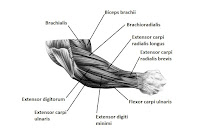
Biggest muscles of the forearmThe brachioradialis, forearm flexors and extensors are responsible for flexion and extension of the hands, lower arms, and upper arms. 

The best way to make the forearms look big is to actually make the muscles of the lower arm larger.

Exercises such as barbell and dumbbell wrist curls, wrist rollers, hammer curls and leverage bar exercises are enough to get the job done. 

It’s true that most compound movements that involve the grip and pulling movements involve the forearm muscles to some degree. In fact, some of the best exercises to grow the forearms include rowing and weighted carries. 

As for the carries, such as farmers walks for big forearms, they involve more of an isometric contraction, which isn’t ideal for making the muscles of the lower arms bigger. 

What Are Considered Big Forearms?

So, if you’re like many others and are wondering what are considered big forearms, consider this: unless you have good genetics to build the forearms, the muscles of the lower arms are relatively small and not prone to much growth. 

However, with continuous effort and adherence to the specificity principle for bodybuilding, just about anyone can develop the musculature of the lower arm and make the forearms look bigger.

Lean forearms
The best way to make the forearms look bigger does involve growing the muscles of the lower arm through progressive overload and periodization for bodybuilding, but it also involves another very important factor. 

Becoming lean and losing bodyfat will make the forearms look bigger and muscular, even if the muscles themselves haven’t grown tremendously.

The definition and separation of the muscles of the lower arms through low bodyfat levels will give the appearance of having large forearm muscles.

Recommended Reading for Muscle Growth

For a more in-depth, advanced and scientifically-based look at how to optimally build muscle and shred fat, check out Renaissance Periodization's Scientific Principles of Hypertrophy Training  

This book is the most comprehensive text on developing the best muscle building programs that I have read to date. 

Look inside and preview the text here at Amazon

Also Read:

3 Surefire Ways to Increase Metabolism and Lose Weight Fast

Body weight scaleAm I too fat to lose weight fast? I've heard that question quite a few time over the years as a personal trainer and fitness coach. 

You may be surprised to learn that many people who are considered overweight or obese are concerned about being "too fat to lose weight fast." 

Well, never fear. It is possible to quickly lose weight, even if you're overweight or obese. 

Is Rapid Weight Loss Sustainable?

Quick weight loss is possible and sustainable if adherence to specific principles is achieved. A disciplined approach to exercise, diet and wise use of nutritional supplements can result in real, noticeable weight loss in a short period of time.

The following 3 quick fat loss tips can be used by anyone who wishes to achieve a lower body weight, reduce bloating through water retention and improve body composition by burning bodyfat.

Exercise Intensity

It should be no surprise that exercise is on the list of ways to quickly lose weight. The fact is, regular, intense exercise is required to boost the metabolism and force the body to burn stored bodyfat for energy. This is at the top of the list of the most effective fat loss strategies for improved appearance, health and longevity. 

As the heart rate is elevated during vigorous exercise, stored fatty acids are liberated from fat cells and used by the body for energy. 

Many traditional forms of long duration cardiovascular exercise have been said to be the most beneficial for burning bodyfat and losing weight fast.

Woman exercising intensely
However, there is evidence that short bouts of high intensity exercise combined with periods of relatively low intensity workout methods is superior to steady state cardiovascular workout programs.

This principle of high intensity interval training, or HIIT, is considered one of the best ways to burn bodyfat and lose weight faster than other forms of exercise.

One of the benefits of high intensity interval training is that is takes far less time than what was previously considered by fitness experts to be ideal for rapid weight loss. 

A HIIT workout as short as eight minutes can prove beneficial in enhancing the metabolism and burning fat. Additionally, the body’s fat burning process continues for hours after a high intensity workout.

Types of exercise programs that include resistance and specific forms of cardiovascular training certainly have their place in any fitness and weight loss plan. 

The key is to workout intensely, no matter what form of exercise is performed. Exercise that is challenging is most effective at burning bodyfat and reducing body weight.

Implement Fasting

Fasting is extremely popular because it is one of the fastest ways to lose weight. Of course, solid research using the most informative, easily-understood books and references is critical. 

Fasting is a nutritional technique that involves reducing or eliminating certain types of food from the diet for a specified period of time. 

Fasting allows the body to eliminate toxins, reduce waste and burn body fat through calorie restriction. There are several popular types of fasting that can be used for a variety of purposes.

Intermittent Fasting Time
Intermittent fasting is used by people who wish to lose weight rapidly, improve digestion and enhance general health. 

The primary principle behind intermittent fasting is completely eliminating all solid food sources for a specific period of time.

 A period of fasting is followed by eating normally to maintain steady metabolic function for fat burning and bodyweight reduction.

Liquid fasting is a technique that restricts all solid food but allows consumption of fluids, primarily water, for a set length of time. Although water is typically preferred as the primary source of liquid, other fluids such as broth and fruit and vegetable juice can be included in a liquid fast.

Supplement Wisely

There are many nutritional supplements on the market that claim to help burn bodyfat, reduce bloating and cause rapid weight loss. 

While many of these types of supplements fail to live up to expectations, some over-the-counter supplements are considered safe and effective.

Dietary supplements that contain high levels of caffeine and other stimulants should be avoided as they tend to increase resting heart rate and elevate blood pressure. 

The compounds included in these types of supplements are generally effective at burning bodyfat through the process of thermogenesis, but the risk of possible health concerns.

An alternative to expensive supplements that are potentially unhealthy are natural products that help reduce hunger, curb cravings and enhance the metabolism through safer means. Rapid weight loss and bodyfat reduction can be achieved without risk to health by supplementing wisely.

These 3 ways to increase the metabolism and lose weight fast can be implemented at any time during a fitness or wellness program to rapidly achieve a lower bodyweight.

Required Reading:

The Top Diet Books for Weight Loss: Your Path to a Healthier You

Powerful Fat Loss Principles Revealed: ACTS Model for Busy Professionals

Calories and Weight Loss: A Brief Discussion

*Please note that if you purchase the products from the Amazon links that I've included above, I may receive a small monetary commission. 

10 Simple Tips to Start a Bodybuilding Program for Muscle Building

Bodybuilding Beginner Muscle
This post provides ten valuable tips on how to start a bodybuilding program and what is needed to build a significant amount of muscle mass.

Read through, apply these tips to help build muscle to get big arms, a big chest and huge legs. 

For an advanced, scientifically-based look at how to optimally build muscle and shred fat, check out Renaissance Periodization's Scientific Principles of Hypertrophy Training  

This book is the most comprehensive text on developing the best muscle building programs that I have read to date. 

Look inside and preview the text here at Amazon

1.  Commitment - Bodybuilding and developing significant amounts of muscle mass requires commitment. It is a totally different lifestyle that entails letting go of old habits and adopting new ones. You cannot go into bodybuilding and be half- hearted about it. It is a test of strength, self-discipline and willpower. Start only when you are sure you can commit time, effort and energy.

2.  Desire - Your decision to start on muscle training must come from a sincere desire for a healthier and a more developed body. Do not go into it just because it’s your New Year’s resolution. People who decide to change something in them when the calendar flips on January 1st are most likely to stray from this discipline. 

3.  Assessment - Make an assessment of your body. Decide what kind of attention goes to which part of your body. Some people have flabbier arms while others have most of the fat collected in their midsection. This way, it is easy for you to create a program that addresses your problem areas.

4.   Goals - Set your goals and create a plan accordingly. How much body fat do you want to lose? How much muscle weight do you intend to gain? Are you after gaining strength? Are you after developing speed and endurance? What about power? Give yourself a deadline of when these goals should be attained. 

5.  Expectations - Manage your expectations. One month is a good start in losing weight but it isn’t enough to get you ripped. Make a realistic visualization of the progress you can achieve in a certain period. Do not set yourself for disappointment. Most beginners get discouraged because of the unrealistic goals they set for themselves.

6.  Lifestyle - Assess your lifestyle. How many hours a week do you intend to devote to working out? How much energy do you still have after work/school? Is it best to go before your daily duties or after? What habits must you get rid of? Alcohol? The weekend buffet? Nightly parties? 

7.  Document - Create a journal. Document your progress from day 1. Write down your current weight. Measure your body fat using a fat caliper. Take photos of your body, especially the problem areas. Compare measurements as you go along your bodybuilding efforts. This shall serve as your motivation in reaching your goals. 

8. Track Progress - The ability to gain differs from person to person so progress cannot be tracked by comparing it with your training buddy, even if both of you started at the same time. You can check your development only by taking note of your present measurement and comparing it with your previous measurement. 

9.  Evaluate - Do not be discouraged if you do not see a change in your weight during your strength training. While you lose weight by burning fat, you also keep or even increase poundage as you build muscle. Evaluate your progress by keeping track of your strength gains and measuring your body fat against muscle weight. 

10.  Environment - Know the difference between setting up an in-home gym versus getting a gym membership. Many people find it easier to stay faithful to their routine in a gym setting. An in-home setting is convenient but poses temptation to slack off. The presence of other bodybuilders is a motivating force. 

The above considerations are valuable for anyone who is interested in beginning a bodybuilding or muscle building program. New bodybuilders who fall into the beginner category would benefit most from implementing these tips.  

Required Reading :

Simple Fat Loss Strategies for Appearance, Health and Longevity

Factors Contributing to the Development of Muscle Mass

Portions of this post are re-published with permission from original authors.

What Muscle Makes the Forearm Look Big?

Brachioradialis Forearm Muscle
Here is my Amazon affiliate link to the leverage bar, a valuable tool in targeting the muscle that makes the forearm look big and muscular. 

There is no doubt that a well-developed set of massively muscular forearms instantly evokes admiration and awe from onlookers and anyone who appreciates a well-built physique. 

Unfortunately, many lifters waste precious time and energy pursuing big forearms by doing compound exercises that don’t necessarily target the muscle that makes the forearm look big. 

Are You Guilty of Any of These Five Gym Etiquette Violations?

Grandma wagging her finger
We would all like to be able to work out at our favorite gym without having to endure the inconsideration and lack of adherence to established gym etiquette by some selfish gym member.

Unfortunately, most of us experience violations of gym etiquette to some degree just about every time we hit the gym.  The question is, have you ever been guilty of violating any one of these most commonly accepted rules of gym etiquette?

Not Allowing Someone to Work In

It is common courtesy to let someone work in on a machine, bench or weight station between your sets.  The concept of working in simply means that you allow others to perform a set of exercise at the same spot as you while you are taking a rest between your sets. 

This does not mean that you have to advertise the fact that you are resting and anybody can just step right in, but if someone politely asks to work in, let them.  On the same token, don’t be afraid to ask to work in if a machine or weight station you want to use is occupied.
Bodybuilder reading newspaper on gym equipment

Hogging the Equipment

Hogging gym equipment is different than not allowing someone to work in.  It means camping out on a weight bench, machine or weight station without acknowledging or even considering the presence of others.

This violation is especially frustrating when the violators gym bag, towel, water bottle and other implements take up a lot of space and cause people to step over and around their property. 

Not Cleaning Up After Yourself

Nothing is more disgusting and unsanitary than using a piece of gym equipment with sweat all over it.  Most gyms have paper towels or sanitary wipes to be wiped down equipment after use.  Equipment should be wiped clean of sweat every time you are done with it. 

If the gym does not provide paper towels or wipes, bring your own or place a towel on the equipment while you’re using it to prevent sweating all over it.

This rule also applies when using gym chalk.  As I explained in the article Gold's Gym Myrtle Beach: My Experience, some gym owners despise the use of chalk in their gyms.  Respect the rules of the management and staff and don't throw chalk all over the place just for the sake of being cool. 

Being Bothersome

I don’t know about you but I don’t like it when people make conversation or are generally obnoxious in the gym.  I go to the gym to lift, not chit chat.  Even if I’m with my lifting partner, the conversation topic is limited to the task at hand. 

Don’t bother someone with questions, or even compliments.  It’s distracting and likely annoys whoever is being spoken to.  And for heaven’s sake, don’t try to find a date at the gym.  
Heavy dumbbells scattered on the gym floor

Not Racking Your Weights

Nobody wants to unload your barbells or put away the dumbbells you left on the floor.  Not only is it simply discourteous to leave your weights on the bars and dumbbells on the floor, it’s dangerous.

I have seen more than a few people trip on weights, drop heavy dumbbells and flip barbells off of a rack taking plates off of the bar.  Don’t be the person who is responsible for someone injuring themselves adding extra work to their workout picking up your discarded weights. 
  

If you find that you are a frequent violator of any of the above rules of gym etiquette, please conduct a personal analysis of your consideration for others and your level of selfishness.  If you’re like the rest of us who get frustrated with people who violate established gym etiquette, take comfort in the fact that you are not suffering alone.

I do not advocate taking aggressive action toward such individuals, but I do encourage you to initiate dialogue with them and/or notify gym management.  After all, adherence to gym etiquette by all results in a productive, positive gym experience for everyone.  

Also Read:

3 Things You Need to Consider If You Want to Build Big, Muscular Arms

18 inch arms

With the most effective, well-designed, science-based muscle building program, these three considerations will help you design and arm building program that will make the muscles of your biceps and triceps bigger and more muscular and help you bust through your plateau of stalled muscle growth.

The Triceps Are a Larger Muscle Group Than the Biceps

The triceps are made up of three separate muscles on the back of the upper arm while the biceps are made up of two relatively small separate muscles on the front of the upper arm.

By simple virtue of the fact that the triceps are made up of three muscles rather than two makes them approximately 33% larger than the biceps before considering muscle fiber arrangement, primary function and aesthetic value.

Because the muscles of the triceps are designed and most used for pushing, pressing and elbow extension, they are more prone to muscle growth than the biceps.  The relatively heavy loads that the triceps endure while bench pressing, overhead pressing and while performing arm extension exercises stimulates muscle fiber growth and development. 

19 inch armsThe biceps are two small muscles that are not as prone to growth as the triceps. 

They are designed for arm flexion and are called upon to assist when performing pulling movements such as rows and pull ups.

The muscle fibers of the biceps are generally not as thick or dense as the muscle fibers of the triceps which leads to slower muscle growth of the biceps. 

In order to build large, muscular arms, all muscles of the biceps and triceps should be exposed to varying degrees of stress and workloads.

However, by placing priority on the muscles of the triceps through pressing and arm extension exercises, you will find that the overall circumference, size and thickness of the arms will increase much more rapidly than by placing the most emphasis on the biceps. 

Overreaching Can Halt Muscle Growth

The muscles of the biceps and triceps are used in just about every compound exercise that is performed.  Therefore they are already exposed to stress during most workouts and don’t require an abundance of additional work.

Performing an excessive amount of sets and reps of biceps curl variations and endless sets of pressing and triceps movements may result in an overreached condition that can bring your upper arm muscle growth to a screeching halt.  

Not only will overtraining the arms result in slowed muscle growth but it can lead to injury that will prevent you from being able to perform your workouts at the required intensity required to stimulate muscle hypertrophy. 

Injuries sustained as a result of over-training or overuse don't always manifest themselves as pulled or torn muscles.

Cumulative micro-trauma of the muscle fibers can minimize contractibility and flexibility and lead to extended periods of delayed onset muscle soreness.

Also, tendonitis of the elbows, wrists and shoulders are all common overuse injuries that can impede growth of the arms muscles by limiting the amount of stress that can be placed on the appropriate muscles.

Inability to perform targeted exercises at the appropriate intensities presents a significant barrier muscle growth.

Isolation Is Not Necessary for Muscle Growth

Cautious execution of isolation exercises that target the muscles of the biceps and triceps are essential for building large, muscular arms.

While it is true that big compound movements place a degree of stress on the biceps and triceps, complete and total development of the upper arms can only result from the intelligent use of isolation exercises that specifically target the muscles of the upper arm. 

In order to prevent over-training and overuse injuries and to ensure optimal growth of the biceps and triceps, isolation exercises should be used at appropriate frequencies with moderate volume.  Pains near and surrounding the joints are an early and important indicator that an injury is occurring or is right around the corner.

When pain is noticed it is time to back off and reassess.  One of the biggest mistakes people make is working through injurious pain and then sustain injury and experience lack of muscle growth.

These crucial principles and concepts are explained in-depth in the text Scientific Principles of Hypertrophy Training by Dr. Mike Israetel, Dr. James Hoffman, et al. The application of these concepts are critical for developing optimal muscularity, strength and athleticism.  

Exercise Programming For Big Arms

Triceps

Considering that you will be bench pressing and overhead pressing once per week, the below exercises, sets and repetitions are a guideline on how to stimulate muscle growth of the upper arms with minimal risk of over-training.

Keep in mind that your triceps will be exposed to stress while performing your big compound pushing and pressing lifts, therefore you don’t have to go overboard with isolation exercises. This example should be performed once per week for best results.

Close Grip Bench Press

3 to 5 sets of 8 to 12 repetitions with a moderate weight

Parallel Bar Dips

3 to 5 sets of as many repetitions as possible with body weight
Once you can perform bodyweight for 12 repetitions, add weight with a dip belt

Overhead Triceps Extensions

3 to 5 sets of 10 to 15 repetitions with a light weight using continuous tension
18 inch arms

Biceps

Your biceps will experience a degree stress when you are performing pulling exercises like rows and pull ups.

Therefore you do not need to annihilate the biceps when targeting them with isolation movements. 

Barbell Curls

3 to 4 sets of 8 to 12 repetitions with a moderate weight

Hammer Curls

2 to 3 sets of 8 to12 repetitions with a moderate weight

Arm Blaster Curls or Preacher Curls

2 to 3 sets of 12 to 15 repetitions with a light weight using continuous tension

When you are planning your workout program to build large, muscular biceps and triceps you need to carefully consider that the triceps are larger and more prone to growth, overreaching will seriously limit your growth potential and the careful execution and implementation of isolation exercises are required to fully develop the upper arms. 

*Please note that if you make a purchase using any of my affiliate links in this post, I may receive a monetary commission.

Also Read:

Who Cares About How Big and Muscular Your Arms Are, Anyway? Here's Who.

People notice when you carry around a set of large, muscular arms.  But who specifically cares how big your arms and why?  Let’s break it down and find out. 

Females Care

Whether they admit it or not, females take note of an impressive pair of muscular arms.  Many girls will claim that being attracted to someone who has big arms is shallow or that they think it’s gross. 

On the contrary, most females find large, muscular arms to be very attractive and subconsciously attribute big arms to a person who is a strong, fearless protector.  

Have you ever noticed how girls often fall all over themselves when a lean, muscular male with large, muscular arms walks by?  I have heard countless females comment on how sexy a nice set of biceps and triceps is.  The truth is, a female’s first impression of you is largely based on appearance.  

This quality is intuitive, not shallow, and should be strongly considered.  Chances are that a male with well-developed upper arms will grab the attention of a female before a small, emaciated person would.

Other Men Care

Competition is the name of the game among men.  This is ingrained in us through our culture and biology and there is nothing we can do to change it.  You probably find yourself sizing up other guys and comparing how muscular you are in comparison and who has bigger, more muscular arms.  I guarantee he’s doing the same to you. 

There’s nothing more rewarding than being the guy with the biggest arms in the room or the one who people go to for lifting advice.  It all comes down to how big the muscles of the upper arms are or how big they appear. 

Your Lifting Partner Cares

 Most of us who lift weights and who have ever had a workout partner know that you tend to experience the best results by lifting with someone stronger and more experienced than you.  That means that one of you is going to have to be the weaker, less experienced partner.  Don’t be that guy.

You can’t do much about your level of experience; that takes time.  But you can build your biceps, triceps and forearms to a degree that your lifting partner isn’t embarrassed to be seen with you or, more importantly, or to the point where you can be considered an expert of arm development.  Everyone who lifts with you or near you will benefit. 

Your Significant Other Cares

One of the most important characteristics in a mate is the ability to provide a feeling of security and protection.  While having big, muscular arms may greatly contribute to attracting a partner initially, the appearance of large, powerful arms will provide that feeling of security and protection. 

The world can be a scary place and most of us feel vulnerable from time to time.  It’s your job to provide peace of mind and protection to your loved one.  Having big biceps, triceps and forearms will go a long way in giving comfort to your significant other in times of fear and vulnerability. 

Bullies Care

You don’t often hear about big, muscular people being picked on, made fun of or beat up.  One of the reasons is the impression that having large, muscular arms gives.  Bullies and mean people tend not to pick on people who they perceive as being bigger or stronger than them.

This principle applies just about everywhere: in the gym, at your workplace, in public, in traffic.  This reaction is instinctive and it is directly related to one of our greatest priorities: self-preservation.

You Care

Do you want to know how I know you care about how big and muscular your arms are?

For one thing, one of the most popular articles on Destination Jacked is Six Tips to Make Your Arms Look Bigger Instantly 

I see how flex your biceps, triceps and forearms in the mirror at the gym, in public restrooms and just about every reflective surface you encounter. 

The fact that you care how big your arms look or how big the muscles of your arms are shows that you know the importance of demonstrating strength, power and confidence to others.  This is a good thing.  Harness this desire to have big arms and continue your pursuit of further developing your biceps, triceps and forearms.

Everyone Else Cares

Let’s be honest, we are hardwired to take notice of and be emotionally impacted by the appearance of (whether it’s an illusion or not) a large, strong, muscular physique.  This is why our  species dominates and how we attract our mates.

Whether you like it or not, you are being judged by your appearance in some manner by just about everyone who lays eyes on you.  This is not earth shattering information.  But wouldn’t you rather be noticed for having a pair of large, muscular arms than for being small, weak and frail-looking?

The fact is, people notice when you have big, well developed arms and they tend to treat you differently than if you have small, fragile arms.  Everyone who sees a pair of muscular biceps, a set of full triceps and a couple of thick forearms instantly recognizes that the bearer is strong and likely possess a large, well developed physique. 

So, what are you waiting for?  If you care what people think about your physique, get to work making your arms look bigger and build a set of mind-blowing arms. 

Also Read: